Statistics Canada released January’s jobs report on Friday (February 6). The data showed that the Canadian workforce shrank by 25,000, or 0.1 percent.
Manufacturing experienced the largest decline, losing 28,000 workers, followed by education with 24,000, and the public sector, which decreased by 10,000. These declines were balanced by increases of 17,000 across information, culture, and recreation; 14,000 in business, building and support services; and 11,000 in agriculture.
Despite the declines, the unemployment rate fell 0.3 percentage points to 6.5 percent. While the rate was the lowest since September 2024, the agency notes that the decrease was driven by fewer people looking for work through the month, and coincided with a 0.4 percent drop in the labor force participation rate, which came in at 65 percent.
The release came just a day after the US Bureau of Labor Statistics (BLS) released its job opening report on Thursday (February 5) that showed that labor demand had decreased to its lowest level since September 2020, as December’s figures fell by 386,000 openings.
The report differs from the employment situation summary, which is typically released on the first Friday of each month. The report has been delayed due to the extended US government shutdown in late 2025 and will be released next Wednesday, February 11.
Employment data is an important metric for assessing the overall health of the Canadian and US economies and plays a significant role in helping central banks set interest rate policy.
For more on what’s moving markets this week, check out our top market news round-up.
Markets and commodities react
Canadian equity markets were mixed this week.
The S&P/TSX Composite Index (INDEXTSI:OSPTX) gained 1 percent over the week to close Friday at 32,470.98, while the S&P/TSX Venture Composite Index (INDEXTSI:JX) shed 5.38 percent to 1,015.34. The CSE Composite Index (CSE:CSECOMP) dropped 1.22 percent to 167.56.
The gold price gained 4.84 percent to close at US$4,951.69 per ounce on Friday at 4:00 p.m. EST. The silver price didn’t fare as well, closing the week down 1.78 percent at US$77.32 on Friday.
In base metals, the Comex copper price recorded a 0.85 percent rise this week to US$5.93.
On the other hand, the S&P Goldman Sachs Commodities Index (INDEXSP:SPGSCI) was down 3.7 percent to end Friday at 587.55.
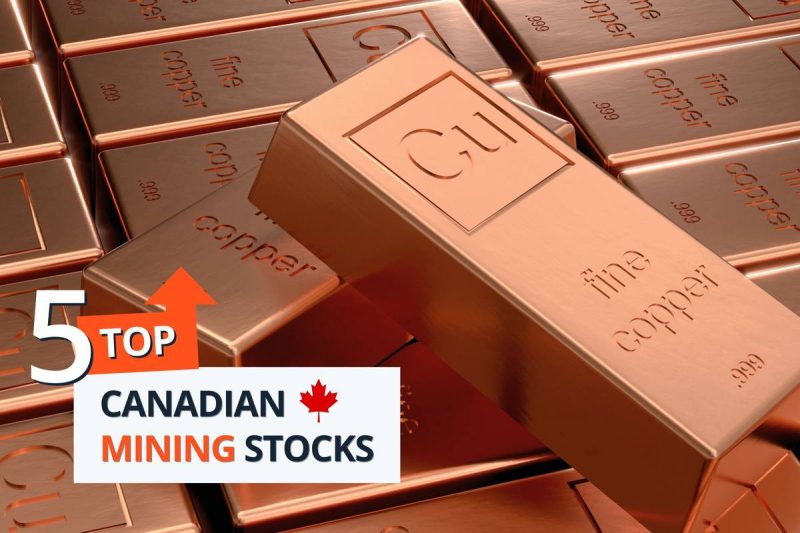
Top Canadian mining stocks this week
How did mining stocks perform against this backdrop?
Take a look at this week’s five best-performing Canadian mining stocks below.
Stocks data for this article was retrieved at 4:00 p.m. EST on Friday using TradingView’s stock screener. Only companies trading on the TSX, TSXV and CSE with market caps greater than C$10 million are included. Mineral companies within the non-energy minerals, energy minerals, process industry and producer manufacturing sectors were considered.
1. Giant Mining (CSE:BFG)
Weekly gain: 69.57 percent
Market cap: C$27.51 million
Share price: C$0.39
Giant Mining is an exploration company working to advance its Majuba Hill District copper, silver and gold project north of Reno in Nevada, US.
The site consists of 403 federal lode mining claims and four private property parcels that cover an area of 3,919 hectares. Mining at the property took place between 1900 and 1950, resulting in the production of 2.8 million pounds of copper, 184,000 ounces of silver and 5,800 ounces of gold.
Extensive exploration work has been carried out at Majuba Hill, with 89,930 feet being drilled since 2007.
The most recent news from Giant came on January 30, when it reported that it planned to drill up to 10,000 feet in a multi-phase drill program at Majuba Hill, targeting three breccia zones.
Following the first phase of 5,000 feet of drilling, the program will include underground and surface sampling to support follow-up drill targeting for the remaining holes.
2. CGX Energy (TSXV:OYL)
Weekly gain: 64.71 percent
Market cap: C$66.02 million
Share price: C$0.28
CGX Energy is an oil and gas exploration company with 27.48 percent ownership of a portfolio of wells in the Corentyne block off the coast of Guyana. Frontera Energy (TSX:FEC) is the company’s joint venture partner in the Corentyne block and also holds 76.05 percent interest in CGX.
The Kawa-1 exploration well was drilled in 2021 and 2022 and encountered an active hydrocarbon system extending to a depth of 6,000 feet, mirroring trends in the Guyana-Suriname Basin. CGX’s Wei-1 well was drilled in late 2022 and is located on-trend between the Kawa-1 well and Exxon’s (NYSE:XOM) Pluma discovery.
CGX and Frontera are currently in a legal dispute with the government of Guyana, which believes the petroleum prospecting license for Corentyne expired in 2024, a stance the joint venture disagrees with. The most recent update on the matter mentioned plans to meet and discuss the situation, with potential dates in November or December of last year.
Shares in CGX posted gains this week, but the company has not released news since November 13, when it announced its third-quarter financial statements. However, Frontera announced on January 30 that it divested its producing Colombian assets while retaining its interests in Guyana, news that may signal that the Corentyne block permitting situation could still be resolved.
3. Saba Energy (TSXV:SABA)
Weekly gain: 61.11 percent
Market cap: C$12.07 million
Share price: C$0.29
Saba Energy is an oil and gas exploration company with operations in British Columbia, Canada, as well as the Philippines.
The company’s primary Canadian operations consist of the producing Boundary Lake and Laprise oil and gas fields, which have a net present value of C$43 million as of its September quarterly report.
The most recent news from Saba came on January 27, when it announced a heads-of-agreement with Nido Petroleum for a farm-in arrangement on a pair of offshore assets in the Philippines.
Saba will earn 60 percent of Service Contract 54 (SC54). SC54 covers an area of 550 square kilometers to depths of 50 to 110 meters and hosts three discovery wells and one production well, which previously produced 270,000 barrels at 19,000 barrels per day before it was closed due to water encroachment.
The company will also earn a 52.73 percent share in the DPPSC Cadlao, which covers an area of 914 square kilometers to depths of 93 meters. The site has 6.8 million barrels in reserves and produced 11.1 million barrels between 1982 and 1992.
If the transaction is completed, Saba will become the operator of both assets. The company plans to open a US$7.5 million convertible debenture private placement to achieve the requirement of raising US$7 million by mid-April.
4. Copper Giant Resources (TSXV:CGNT)
Weekly gain: 60.66 percent
Market cap: C$157.77 million
Share price: C$0.98
Copper Giant Resources is an exploration company advancing its Mocoa copper-molybdenum project in Southern Colombia. It changed its name from Libero Copper and Gold last year.
The property covers 1,324 square kilometers and hosts a copper porphyry system originally discovered in 1973.
A November 2025 mineral resource estimate significantly increased its resource. Mocoa now holds an inferred resource of 7.6 billion pounds of copper and 1 billion pounds of molybdenum, at 0.31 percent copper and 0.039 percent molybdenum, from 1.12 billion metric tons of ore. The upgrade made the project South America’s largest undeveloped molybdenum deposit.
The most recent news from Copper Giant came on January 29, when it reported results from the first drill hole at the La Estrella target. While assays returned low-grade mineralization, the company noted that the significance was geological, as it confirmed continuity of the porphyry system beyond the established deposit.
The release also reported results from a second hole at the southern edge of the Mocoa footprint, which the company said were stronger than previously interpreted at the southern margin of the deposits. Grades in the hole were 0.13 percent copper and 0.01 percent molybdenum over 804 meters starting from surface, which included an intersection of 0.44 percent copper and 0.05 percent molybdenum over 33 meters.
5. Benz Mining (TSXV:BZ)
Weekly gain: 50.46 percent
Market cap: C$749.9 million
Share price: C$3.25
Benz Mining is a gold exploration company that is focused on advancing projects in Québec, Canada, as well as Western Australia.
Its Eastmain project consists of an 8,000 hectare property located in Central Québec within the Upper Eastmain Greenstone belt. The most recent resource estimate from May 2023 reported an indicated resource of 384,000 ounces of gold from 1.3 metric tons of ore grading 9 g/t gold, and an inferred resource of 621,000 ounces of gold from 3.8 metric tons grading 5.1 g/t.
In 2025, Benz acquired the Glenburgh and Mount Egerton gold projects in Western Australia from Spartan Resources (ASX:SPR). It spent much of 2025 exploring Glenburgh, which covers an area of 786 square kilometers and features 50 kilometers of strike. The site hosts six priority extension targets and 5 kilometers of exploration trend with over 100 parts per billion gold.
A November 2024 resource estimate for Glenburgh showed an indicated and inferred resource of 510,000 ounces of gold from 16.3 million metric tons of ore with an average grade of 1 g/t gold.
On January 28, the company announced a shallow, high-grade discovery at the Glenburgh project’s Icon trend. Assays returned grades including 29 g/t gold over 13 meters starting at a depth of 60 meters. Additionally, results showed wide mineralization as well, including 200 meters grading 1 g/t gold starting at 76 meters.
The most recent news from Benz came the next day, when it announced it received firm commitments for a AU$75 million bought deal placement, which it said was led by strong demand from two global institutional fund. The company said the investment increases its pro forma cash position to AU$94 million, which will be allocated across its portfolio, particularly focused on the Glenburgh project.
FAQs for Canadian mining stocks
What is the difference between the TSX and TSXV?
The TSX, or Toronto Stock Exchange, is used by senior companies with larger market caps, and the TSXV, or TSX Venture Exchange, is used by smaller-cap companies. Companies listed on the TSXV can graduate to the senior exchange.
How many mining companies are listed on the TSX and TSXV?
As of December 2025, 898 mining companies and 71 oil and gas companies are listed on the TSXV, combining for more than 60 percent of the 1,531 total companies listed on the exchange.
As for the TSX, it is home to 175 mining companies and 51 oil and gas companies. The exchange has 2,089 companies listed on it in total.
Together, the TSX and TSXV host around 40 percent of the world’s public mining companies.
How much does it cost to list on the TSXV?
There are a variety of different fees that companies must pay to list on the TSXV, and according to the exchange, they can vary based on the transaction’s nature and complexity. The listing fee alone will most likely cost between C$10,000 to C$70,000. Accounting and auditing fees could rack up between C$25,000 and C$100,000, while legal fees are expected to be over C$75,000 and an underwriters’ commission may hit up to 12 percent.
The exchange lists a handful of other fees and expenses companies can expect, including but not limited to security commission and transfer agency fees, investor relations costs and director and officer liability insurance.
These are all just for the initial listing, of course. There are ongoing expenses once companies are trading, such as sustaining fees and additional listing fees, plus the costs associated with filing regular reports.
How do you trade on the TSXV?
Investors can trade on the TSXV the way they would trade stocks on any exchange. This means they can use a stock broker or an individual investment account to buy and sell shares of TSXV-listed companies during the exchange’s trading hours.
Article by Dean Belder; FAQs by Lauren Kelly.
Securities Disclosure: I, Dean Belder, hold no direct investment interest in any company mentioned in this article.
Securities Disclosure: I, Lauren Kelly, hold no direct investment interest in any company mentioned in this article.